

Introduction
As businesses expand into new markets and industries, managing multiple operations efficiently becomes increasingly important. One of the most common corporate structures used by growing organizations is the Parent Company model. This structure allows a business to own and control other companies while maintaining centralized management and strategic oversight.
At Eective, we assist businesses with company formation, Saudi Commercial Registration (CR), parent company documentation, and international expansion services. Understanding how a parent company works can help entrepreneurs and investors choose the right structure for sustainable business growth.
In this guide, we explain what a parent company is, how it operates, its benefits, and why it is widely used by businesses worldwide.
What Is a Parent Company?
A Parent Company is a company that owns enough shares in another company to control its management and operations. The company being controlled is known as a subsidiary.
The parent company may own a majority stake or even 100% ownership of a subsidiary. Through this ownership, the parent company can influence important decisions, business strategies, and financial planning.
Parent companies are commonly used by multinational corporations, investment groups, and businesses expanding into international markets.
How Does a Parent Company Work?
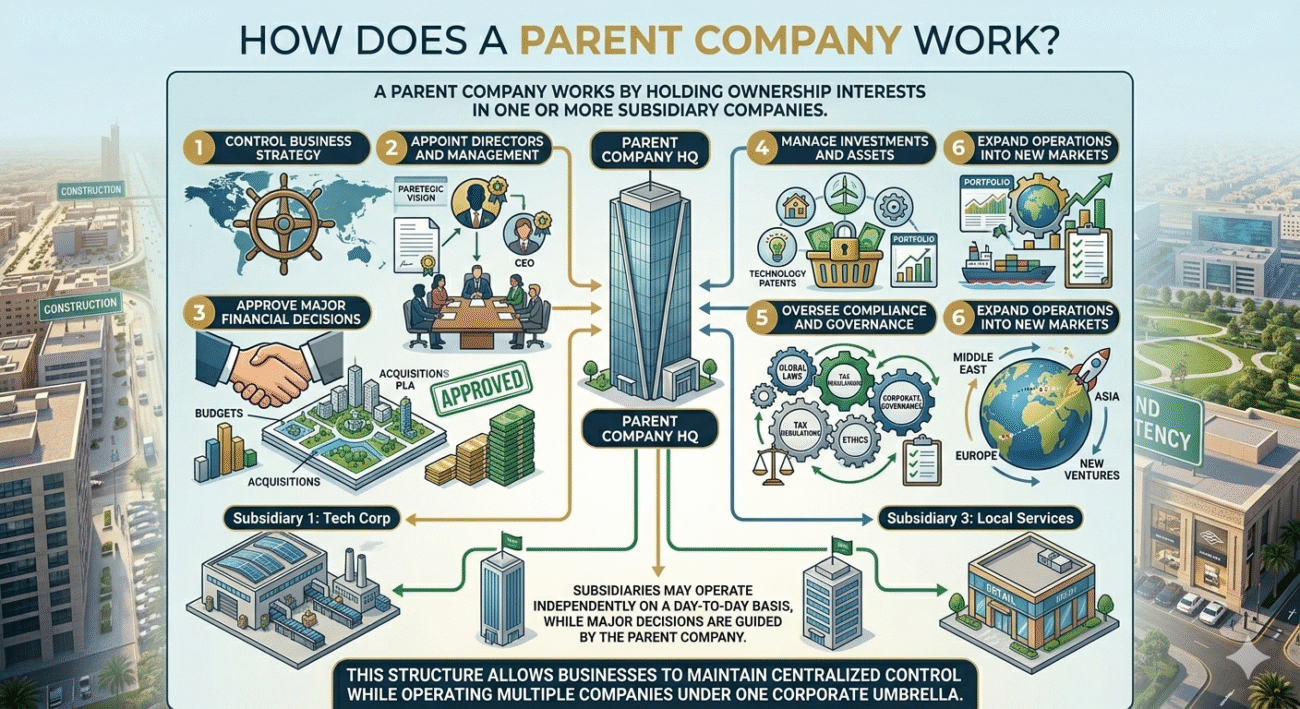
A parent company works by holding ownership interests in one or more subsidiary companies. While subsidiaries may operate independently on a day-to-day basis, major decisions are usually guided by the parent company.
The parent company can:
- Control business strategy
- Appoint directors and management
- Approve major financial decisions
- Manage investments and assets
- Oversee compliance and governance
- Expand operations into new markets
This structure allows businesses to maintain centralized control while operating multiple companies under one corporate umbrella.
Parent Company vs Subsidiary
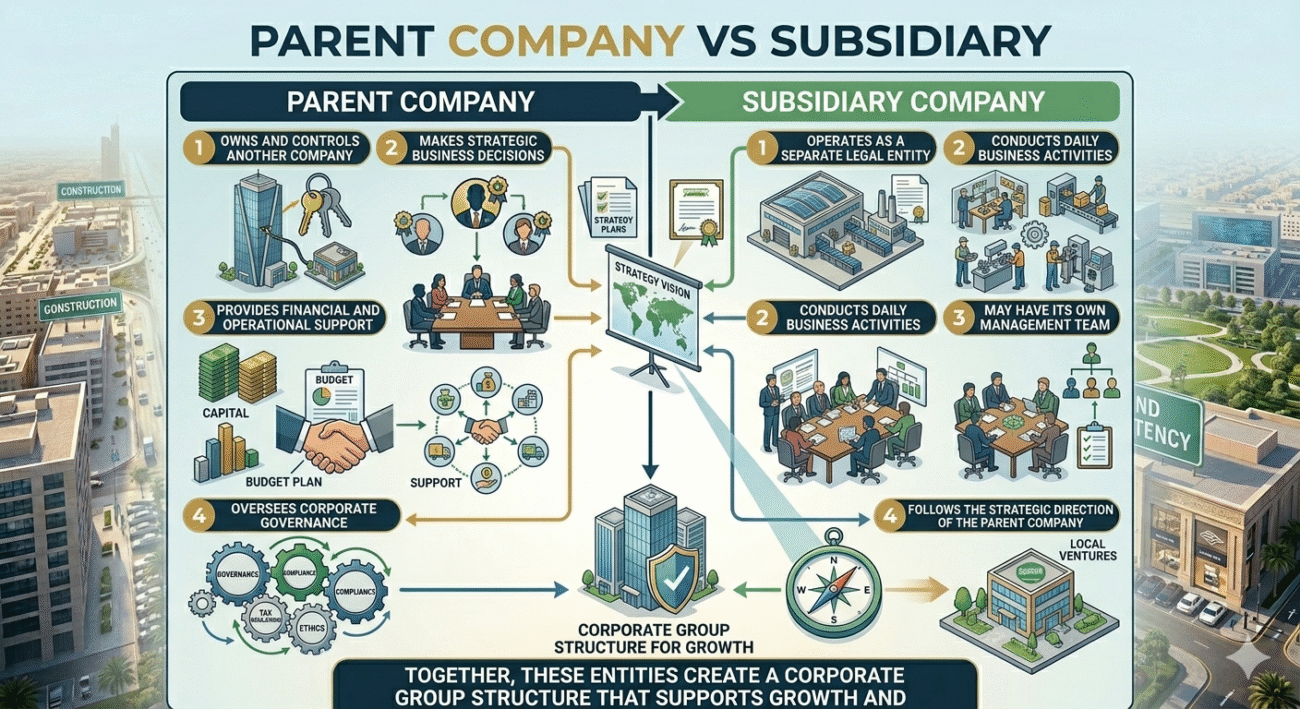
Many people confuse parent companies with subsidiaries. Understanding the difference is important.
Parent Company
- Owns and controls another company
- Makes strategic business decisions
- Provides financial and operational support
- Oversees corporate governance
Subsidiary Company
- Operates as a separate legal entity
- Conducts daily business activities
- May have its own management team
- Follows the strategic direction of the parent company
Together, these entities create a corporate group structure that supports growth and expansion.
Types of Parent Company Structures
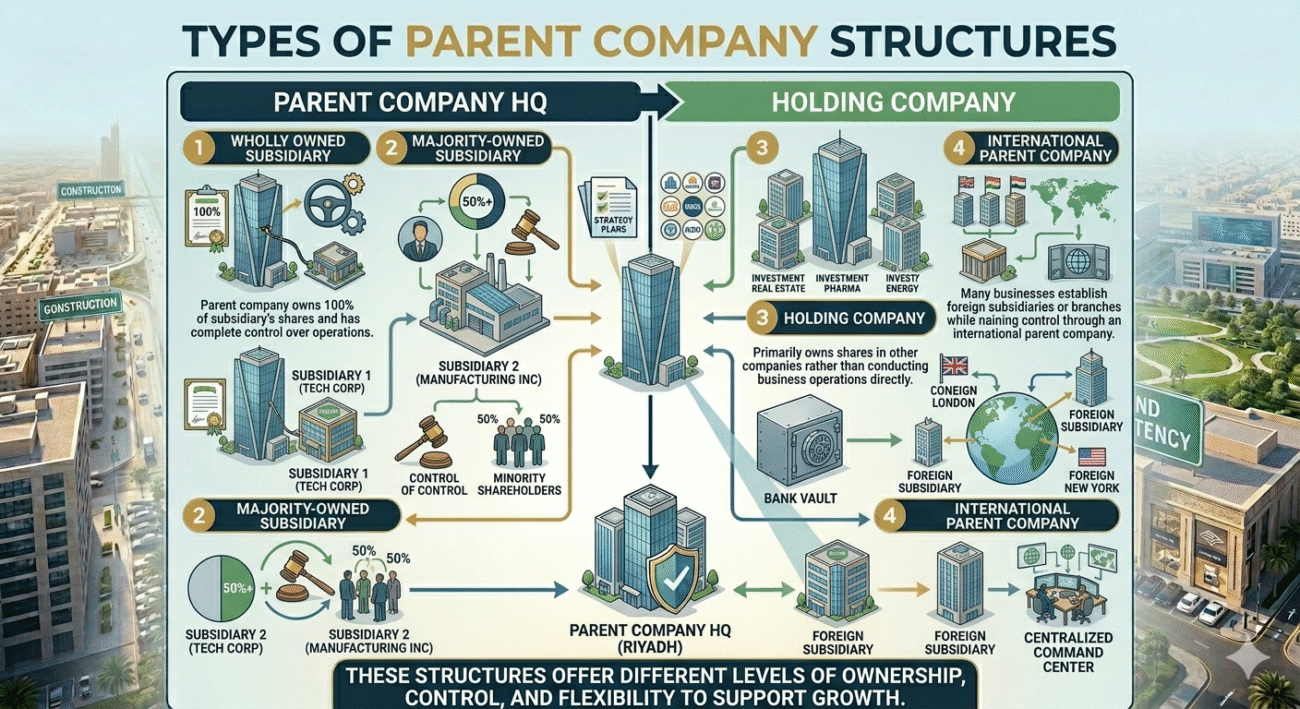
Wholly Owned Subsidiary
In this structure, the parent company owns 100% of the subsidiary’s shares and has complete control over operations.
Majority-Owned Subsidiary
The parent company owns more than 50% of the subsidiary, giving it controlling authority while allowing minority shareholders to participate.
Holding Company
A holding company is a type of parent company that primarily owns shares in other companies rather than conducting business operations directly.
International Parent Company
Many businesses establish foreign subsidiaries or branches in different countries while maintaining control through an international parent company.
Benefits of a Parent Company Structure
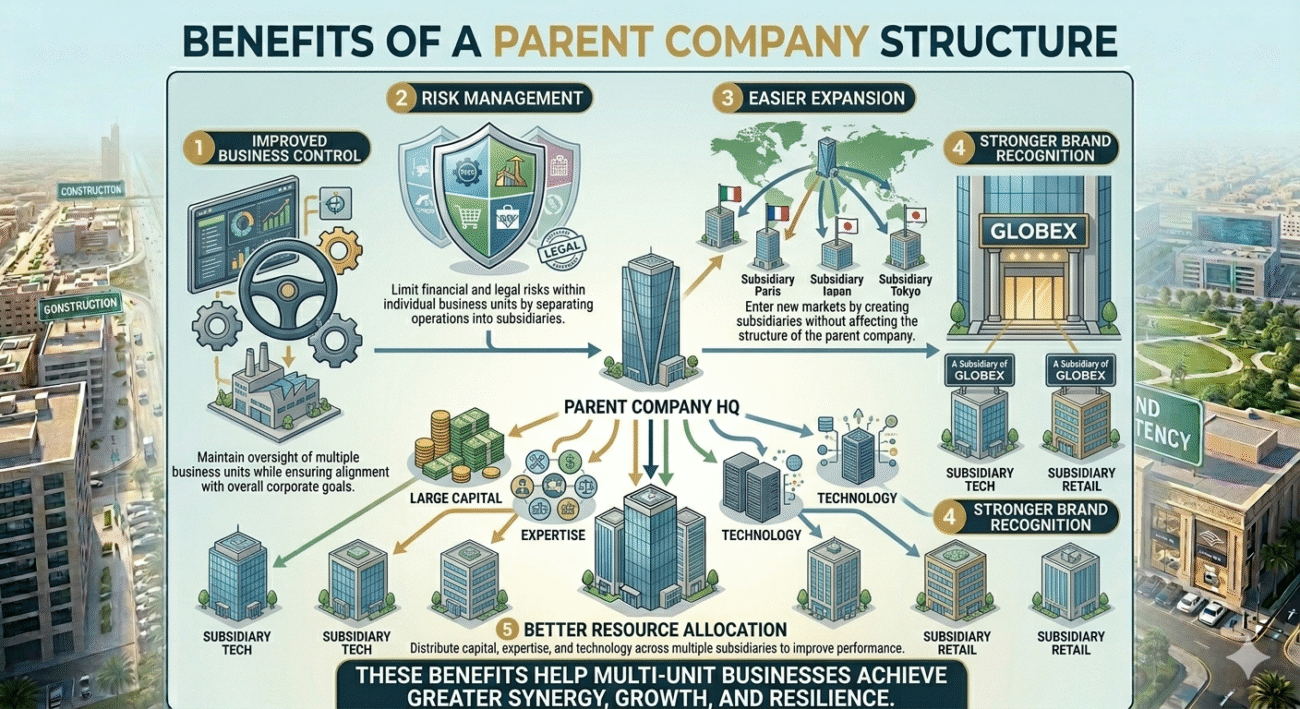
Improved Business Control
A parent company can maintain oversight of multiple business units while ensuring that all entities align with overall corporate goals.
Risk Management
Separating operations into subsidiaries can help limit financial and legal risks within individual business units.
Easier Expansion
Businesses can enter new markets by creating subsidiaries without affecting the structure of the parent company.
Stronger Brand Recognition
Subsidiaries can benefit from the reputation, experience, and resources of an established parent company.
Better Resource Allocation
Parent companies can distribute capital, expertise, and technology across multiple subsidiaries to improve performance.
Why Businesses Use Parent Companies
Businesses choose parent company structures for several reasons:
- International expansion
- Investment management
- Asset protection
- Tax planning opportunities
- Market diversification
- Operational efficiency
- Regulatory compliance
This model is particularly popular among multinational corporations operating in multiple countries.
Parent Companies in Saudi Arabia
Saudi Arabia has become an attractive destination for foreign investors seeking to establish branches and subsidiaries under a parent company structure.
A foreign parent company can register a Saudi entity to conduct business activities in the Kingdom while maintaining strategic control from its home country. This approach provides access to one of the largest economies in the Middle East and supports long-term business growth.
Many international companies use parent company structures when applying for Saudi Commercial Registration (CR) and expanding their operations within the region.
Common Examples of Parent Companies
Some of the world’s largest corporations operate through parent company structures.
Examples include:
- Technology companies managing multiple brands
- Manufacturing groups operating different production businesses
- Investment firms owning various subsidiaries
- International corporations with offices across multiple countries
These structures allow organizations to manage diverse operations efficiently while maintaining centralized control.
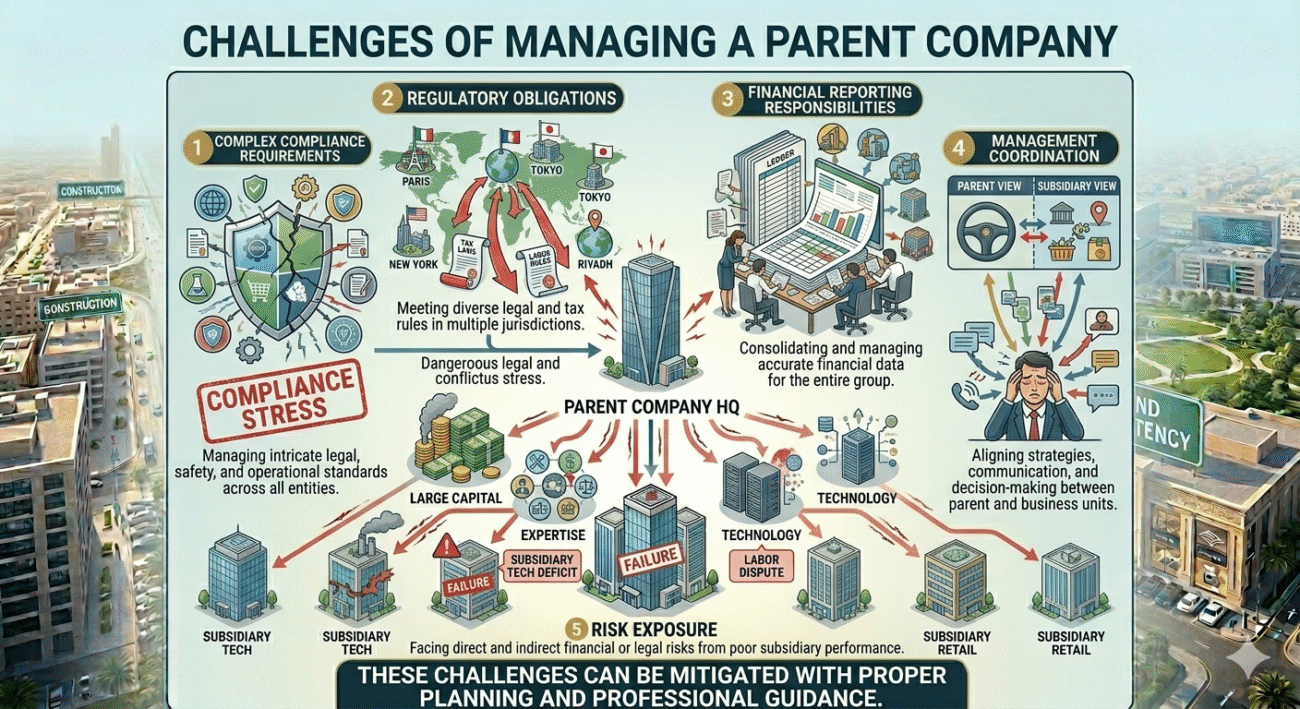
Challenges of Managing a Parent Company
Although parent companies offer many advantages, they also face challenges:
- Complex compliance requirements
- Regulatory obligations across different jurisdictions
- Financial reporting responsibilities
- Management coordination between subsidiaries
- Risk exposure from subsidiary performance
Proper planning and professional guidance can help businesses overcome these challenges.
How Eective Can Help
At Eective, we provide professional support for businesses looking to establish and manage parent company structures. Our services include:
- Parent company documentation support
- Saudi Commercial Registration (CR) services
- Company formation assistance
- Apostille and attestation services
- Foreign business expansion support
- Compliance and regulatory guidance
Our team helps businesses streamline the registration process and ensure compliance with local requirements.
Get Started with Eective
International business expansion requires careful planning and professional guidance. Whether you are launching a startup, expanding an existing business, or exploring global opportunities, Eective can help simplify the process.
Ready to expand your business globally?
👉 Get a Free Consultation: https://forms.gle/KK6CQxrNheia6VDZ9
Submit your details through our inquiry form, and our specialists will help you identify the most suitable solutions for your business growth objectives.
Conclusion
A Parent Company is a powerful business structure that enables organizations to control and manage multiple companies while supporting growth, expansion, and risk management. Whether operating locally or internationally, a parent company provides strategic oversight and financial control that can help businesses achieve long-term success.
For companies planning to expand into Saudi Arabia or other international markets, understanding how a parent company works is an important first step toward building a strong and scalable business structure.